Most companies track whether an export market is adding new regulations. Relatively few track whether existing regulations are being rewritten.
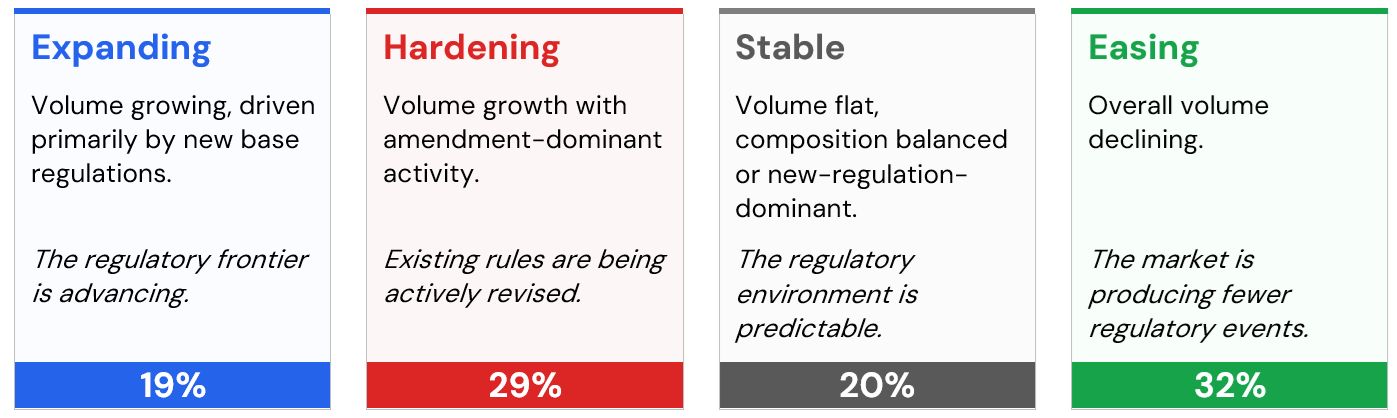
We analysed 12 months of WTO non-tariff-barrier notifications across 75 markets and classified each one into four postures:
- Expanding — adding new regulations
- Hardening — amending existing regulations
- Stable — flat notification volumes
- Easing — declining volumes
The finding that surprised us most: 29% of markets are “Hardening” — not adding new regulations so much as actively revising rules that are already on the books.
Why does this matter? If you certified a product last year for India, Japan, or Kenya — all Hardening markets — the rules you certified against may have already changed. Re-certification is almost always more expensive than first-time compliance, because you are reworking products and processes already in production.
Hardening markets don’t show up if you only monitor total notification counts. They may look calm on the surface, but underneath, the rules of the game are shifting for exporters who believed they were already compliant. The most expensive compliance surprise is the one in a market you thought you had already handled.